
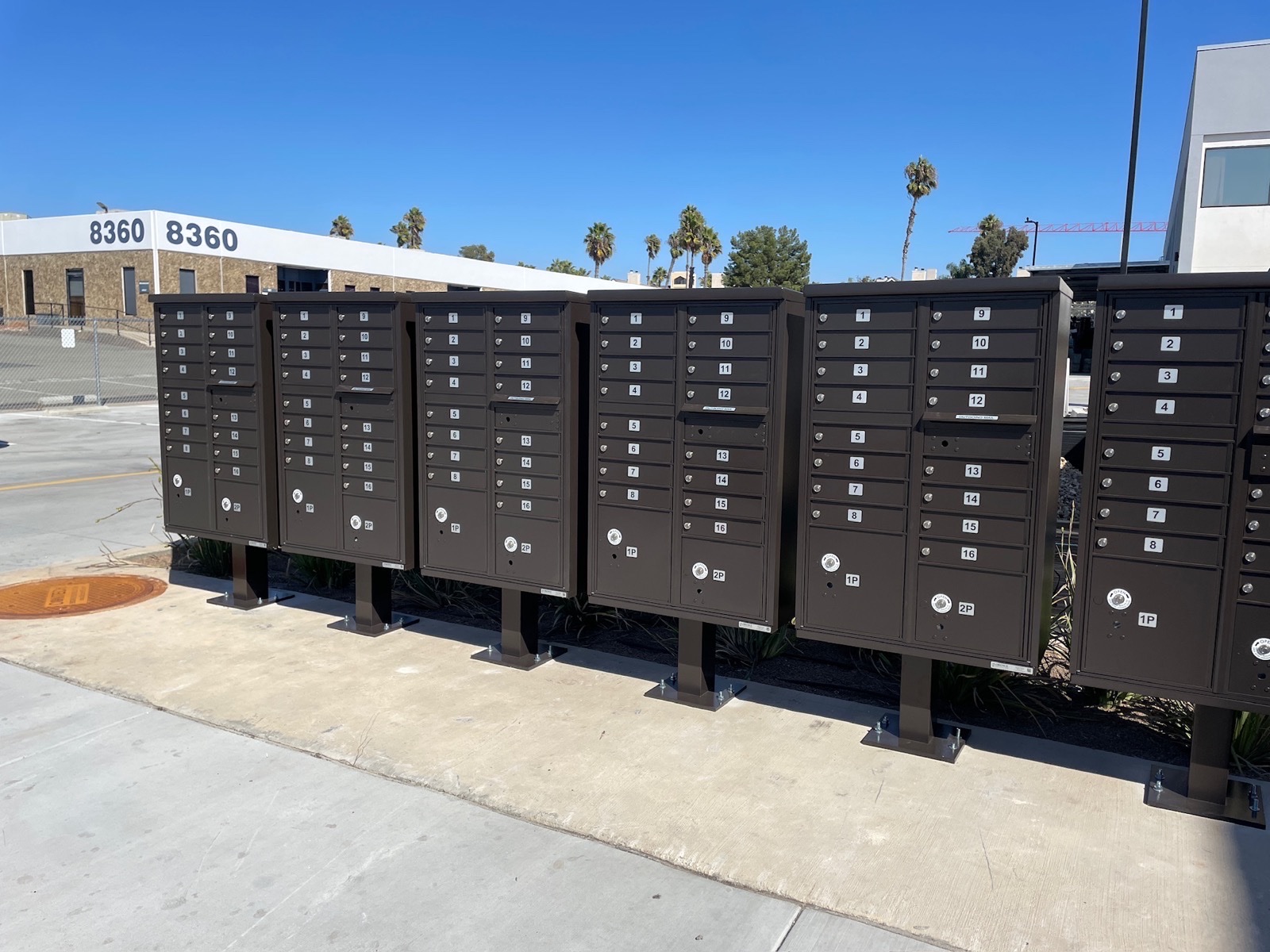
A Cluster Box Unit (CBU) installation is a compliance project as much as it is a construction project. In San Diego, most HOA boards and property managers need a predictable plan that covers USPS coordination, site layout, ADA access, and resident communication. This guide is a comprehensive checklist you can use in board meetings and project planning.
If you are just getting started, review the CBU installation service and confirm coverage for San Diego.
Who this guide is for
- HOA boards replacing outdated or damaged mailbox banks.
- Property managers planning a new CBU install.
- Builders and contractors coordinating USPS approval.
Key terms to align on
- CBU: A centralized mailbox bank with USPS delivery access.
- USPS approval: Required confirmation for placement and access.
- ADA compliance: Reach range and approach clearance requirements.
Quick summary for board members
- USPS approval is required before installation.
- ADA reach and approach clearances must be verified at the site.
- The project scope should include pads, anchors, layout, and USPS sign-off.
Phase 1: Scope definition and project goals
Start by defining the problem you are solving and what success looks like. When the scope is clear, approvals and construction move faster.
Questions to answer
- Are you replacing damaged mailboxes or adding new capacity?
- Do you need parcel lockers now, or is the focus on letter compartments?
- Is this a single site or multiple clusters across a large property?
Deliverables to document
- Mailbox type and compartment counts.
- Existing equipment condition (photos help).
- Proposed locations and access routes.
Phase 2: USPS coordination and approval
USPS approval is not optional. It should happen before fabrication or construction.
USPS coordination checklist
- Schedule a site visit with a USPS-approved installer.
- Document the proposed location and carrier access route.
- Confirm if the carrier needs a new or updated delivery path.
- Keep written notes or approvals for your records.
Helpful links:
Phase 3: ADA and accessibility verification
ADA compliance is the most common reason mailbox projects fail inspection. Confirm compliance early.
ADA details to verify
- Reach range for all compartments, including parcel lockers.
- Clear, stable approach and adequate maneuvering space.
- Surface slope, path width, and doorway clearance (if inside a mailroom).
If you need a deeper review, see ADA-compliant installs.
Phase 4: Site selection and layout
The location must satisfy USPS access, resident convenience, and HOA design standards.
Site selection criteria
- Visibility and lighting.
- Clear access for delivery vehicles.
- Safe resident access at all times of day.
Layout checklist
- Confirm mailbox orientation and swing clearance.
- Verify setbacks from curbs or landscaping.
- Identify underground utilities before pad work.
Site walk checklist for board members
Bring this list to the site visit so the board can document decisions.
Checklist
- Walk the carrier approach route and note obstructions.
- Confirm lighting and visibility at early delivery hours.
- Record distance from parking or primary resident paths.
- Photograph surface conditions and drainage.
- Note any landscaping or irrigation that could interfere with the pad.
Phase 5: Construction scope and pad work
A durable foundation prevents long-term alignment and security issues.
Pad and anchor checklist
- Pad size and depth defined in the scope.
- Reinforcement and drainage confirmed.
- Anchors aligned to manufacturer requirements.
Construction tasks to include
- Demolition or removal of existing equipment.
- Concrete pour and cure time.
- Final mounting and leveling.
Phase 6: Procurement and lead times
CBU lead times vary. Order timing should align with approvals and site readiness.
Procurement checklist
- Manufacturer and model confirmation.
- Finish and keying requirements.
- Delivery schedule coordinated with installation window.
Phase 7: Resident communication and access planning
Most HOA friction happens because residents are surprised. A simple communication plan avoids that.
Resident notice plan
- Work schedule and duration.
- Any temporary mailbox access changes.
- Key distribution plan after installation.
Sample resident notice (short form)
- Date and time of work window.
- Any temporary access changes.
- Contact for questions.
Phase 8: Inspection, sign-off, and handoff
The goal is a clean USPS inspection and a smooth handoff to property management.
Handoff checklist
- USPS sign-off documented.
- Keys delivered to property management.
- Final punch list completed.
Budget and scope line items to expect
While every project is different, these are common cost drivers:
- Site demo and removal.
- Concrete pad and anchorage.
- CBU equipment and hardware.
- USPS coordination and inspection.
- Tenant notices and key distribution.
Repair vs replace decision check
Some boards are unsure if they should repair existing units or replace them with CBUs.
Repair may be reasonable if
- Damage is isolated to a few doors or locks.
- The current layout is USPS compliant.
- Access and ADA clearance still meet requirements.
Replacement is usually better if
- Multiple boxes are damaged or corroded.
- The layout no longer meets USPS or ADA standards.
- You need additional parcel capacity or compartments.
If you are unsure, review repairs and lock changes versus mailbox replacement and retrofits.
Risk register: common failure points
Use this list to spot issues early.
High risk
- USPS approval not documented.
- ADA reach range not verified.
- No clear access route for carriers.
Moderate risk
- Lighting or visibility is poor.
- Drainage or surface slope affects access.
- Resident notice plan is unclear.
Board-ready documentation pack
Prepare a simple project file so future board members can verify compliance.
Documents to keep
- USPS approval notes or confirmation.
- Final layout and site photos.
- Contractor scope of work.
- Inspection sign-off and key distribution record.
Sample timeline (adjust as needed)
- Week 1: Site visit and USPS review.
- Week 2: Final layout and scope approval.
- Week 3: Pad work and site preparation.
- Week 4: CBU installation and USPS sign-off.
Post-install maintenance plan
Even new CBUs need a simple maintenance routine.
Best practice checklist
- Inspect doors and locks seasonally for wear.
- Confirm labels remain legible and secure.
- Re-check pad alignment after heavy weather.
- Document any repeated vandalism or forced entry.
San Diego-specific considerations
San Diego properties often deal with coastal corrosion, mixed-use site constraints, and rising package volume. Plan for long-term durability and growth by considering parcel locker capacity even if your immediate need is only letter compartments.
Frequently asked questions
How long does a CBU installation take in San Diego? Timeline depends on USPS review and site readiness. Most projects include a site visit, approval, pad work, installation, and final sign-off.
Do we need USPS approval if we keep the same location? Yes. USPS typically requires approval for the mailbox type, location, and access route.
Can we add parcel lockers later? Yes, but it is often more cost-effective to plan for lockers during the initial installation if package volume is growing.
Next steps
If you want a structured, inspection-ready plan, start with the CBU installation service or request a quote through the San Diego service area page.